Showing posts with label Yervoy. Show all posts

Thursday, April 23, 2015

Combinatorial Therapy Will Revolutionize Cancer Therapy ...Just wait until ASCO 2015!!


Bristol-Myer Squibb Pharmaceutical Research Institute
Attention: Elliott Sigal
Route 206, Provinceline Road
P.O. Box 4000
Princeton, New Jersey 08543 U.S.A...

 Date: 3-10-2010


Dear Dr. Sigal:
I want to thank you for responding to my emails over the last few months. I know I can be candid and straight to the point sometimes. By reopening the compassionate Drug Use (ipilimumab) you and your company gave the Melanoma Patients “The Last Chance of HOPE”. You don’t know how much this means to us. If we haven’t passed the “Lethal Tumor Burden” we still have a chance of survival. I believe you have done your company justice and showed your compassion. My faith in the Company’s Ethics has been restored.

Now we need to prove to the world that this drug may be one of the most important discoveries in the last twenty years of Cancer. By taking the “Brakes off the Immune System” we can harness our own immune system to battle cancer. Granted we may have to use the drug in combinatorial therapy to rid the host of the cancer once and for all. I hope you and your company can collaborate together with all the major players in this exciting field of Oncology. See it took millions of years for our immune system to evolve, so why do we think that one drug can do it all. We need to approach the Beast arm to arm, to block all the pathways so it can’t escape. This can only be done by using one’s own immune system.

Can you imagine working out a protocol that will vaccinate the patient with the patients own tumor–specific antigen? And Ipilimumab (Anti-CTLA-4 Blockade) is at the center of this revolutionary therapy/protocol. Please if you get a chance, listen to some of the lectures and symposiums from the like of Dr. James Allison, Dr. Jedd Wolchok, Dr. Antonio Ribas, Dr. Jeffery Weber, Dr Keith Flaherty and others. You will be amazed at their accomplishments in the clinical setting. But they need more. They need access to the entire drug arsenal that is available across companies. We now know that timing and dose concentration plays a major roll in setting up an immune response. There are feedback loops. It is like dominos. You have this elaborate step-up. It may take weeks to build. Once you set it in motion, the chips begin to fall. There are different pathways, cytokines, T-cells, receptors, etc that need to be taken into account get the right immune response. This immune response can only be generated if you have all the keys to unlock the response. We need yours and other Pharmaceuticals to work together for the good of the cancer patients. We need to take down all the red tape which also includes the FDA.

“Our Life depends on it.”

Thanks again.
Sincerely,
Jim Breitfeller


“It is not the strongest of the species that survives, nor the most intelligent, but the one most
responsive to change.”

~Charles Darwin~

Take Care,

Jimmy B


Photobucket

Friday, March 27, 2015

The Missing Link in T-cell activation using a Vaccine, "The Danger Signal" may be due to an enzyme called IDO

The Missing Link in T-cell activation using a Vaccine, "The Danger Signal" may be due to an enzyme called IDO

As I research why some patients respond to therapies i.e. vaccination and other immunotherapy and others don’t, I ask WHY? In my quest to get the answer or answers, I came across a paper called “Marked Differences in Human Melanoma Antigen-Specific T Cell Responsiveness after Vaccination Using a Functional Microarray”.

Daniel S. Chen1,2#, Yoav Soen3#, Tor B. Stuge4, Peter P. Lee4, Jeffrey S. Weber5, Patrick O. Brown2,3, Mark M. Davis2,6* 1 Department of Internal Medicine/Division of Oncology, Stanford University, Stanford, California, United States of America, 2 Howard Hughes Medical Institute, Stanford University, Stanford, California, United States of America, 3 Department of Biochemistry, Stanford University, Stanford, California, United States of America, 4 Department of Medicine, Stanford University, Stanford, California, United States of America, 5 Norris Cancer Center, University of Southern California, Los Angeles, California, United States of America, 6 Department of Microbiology and Immunology, Stanford University, Stanford, California, United States of America

This is what I was looking for! It may hold the answer or could possibly point me in the right direction. In the paper I came across a diagram that peaked my interest. It was a comparison between responders and non-responders.


We concluded from these studies that IL-1 and perhaps IL-6 play a critical role in the differentiation and expansion of Th17 cells. Yoshihiro Miyahara et al
 
IL-6 controls Th17 immunity by inhibiting the conversion of naive CD4+ T cells into Foxp3+ regulatory T cells.

Using in vitro and in vivo approaches, we determined that under neutral conditions, simultaneous activation of Tregs and naive CD4+ conventional T cells in the presence of APCs resulted in conversion of Tregs into IL-17–producing cells, and endogenous IL-1β was mandatory in this process according to Vassiliki A. Boussiotis et al. “IL-1β–Mediated Signals Preferentially Drive Conversion of Regulatory T Cells but Not Conventional T Cells into IL-17–Producing Cells”

IL-6 protects CD4 T cells from cell death but also inhibits the suppressive effect of T regs.

“Thus, the addition of IL-6 to the tumor microenvironment skews the balance toward Th17 cells in a murine model of pancreatic cancer. The delayed tumor growth and improved survival suggests that induction of Th17 in the tumor microenvironment produces an antitumor effect.” David C. Linehan  et al

They were looking at the cytokines secreted after the vaccine was given. When I saw what the cytokines were, I knew I was on the right track. These cytokines help in the differentiation of the CD4+ T-cells. What a find!!


Naïve CD4 T cells in the presence of   TGF-b and IL-2 and others differentiate into Tregs.

TGF-b accelerates the CTLA-4 expression by stimulated CD4+ CD25- T-cells

TGF-b requires CTLA-4 early after T-cell activation to induce FoxP expression generating CD4+ CD25+ Treg  Regulatory cells.

The Th-17 cells produce IL-17. .IL-17 induces the production of many other cytokines (such as IL-6, G-CSF, GM-CSF, IL-1β, TGF-β, TNF-α)


So what was the non-responder missing, IL-6.  With the missing IL-6, they weren’t able to produce Th-17 that secreted IL-17.

While TGF-β is a critical differentiation factor for Treg cells, IL6 completely inhibits the generation of Treg cells induced by TGF-β. Instead, IL6 and TGF-β together induce the differentiation of pathogenic Th17 cells. With IL-6 missing in the microenvironment, Treg Cells flourish.

If the CD4 + T cells differentiate into TH2 cells that produce IL-4, the other cells inhibited to produce IL-6. IL-4 was found to inhibit TNF-α and IL-1β by activated monocytes almost 100 %. The Secretion of IL-6 was decreased by approximately 80 % in the presences of IL-4 Cytokine. TE Velde et al 1990

 They were missing “The Danger Signal”.

Friendly inflammation “The Danger Signal”


Most of the time you have no notion of the microbial life-and-death struggle being waged within your body. At other times, though, you are acutely aware of the exact location of the battleground, thanks to the unmistakable signs of inflammation — heat, pain, redness, and swelling. Inflammation, the buildup of fluid and cells at the point of infection/cancer, is put into motion by cytokines — proteins that are released into the blood by the innate immune system when it encounters germs. Cytokines function like police dispatchers. They signal there's a problem, which activates the immune system's highway patrol force: the circulating lymphocytes of the adaptive immune system. These lymphocytes cruise the highways of the blood vessels and lymphatic system. In response to the chemical signal from the cytokines, increased blood flow rushes these circulating cells to the trouble spot.

 “The CD8+ T-cell-mediated Immune Response to Eradicate the Tumors


 “Three major events must occur to induce CD8+ T cell–mediated, tumor-protective immunity against syngeneic melanoma. First, the T-cell receptor must be triggered by a (or multiple) self antigen–derived peptide MHC class I complex . Therefore, this event depends entirely on appropriate antigen presentation, which is most efficiently provided by mature dendritic cells. Peripherally tolerant or “ignorant” self-reactive T-cell clones, once properly activated, may serve as tumor-specific effector T cells .Second, simultaneously with T-cell receptor triggering, a distinct second costimulatory signal must be delivered, mediated by IL-2, B7-1, or B7-2, which engage IL-2 receptors and CD28 on the surface of the T cell, respectively. A source of these cofactors for effective CD8+ T-cell stimulation can be provided by CD4+ T cells that release critical amounts of IL-2, or by mature dendritic cells that display an increased level of B7-1/B7-2 costimulatory molecules on their cell surfaces. Third, inflammatory cytokines, including IL-1, IL-6, IL-12, IL-17 and IFN-γ provide a third signal that acts directly on T cells, referred to as the “danger signal”. This signal was found to optimally activate TH1 differentiation and lead to clonal expansion of T cells.


The responder was able to produce inflammatory cytokines, including IL-1, IL-6, IL-12, IL-17 and IFN-γ provides a third signal that acts directly on T cells, referred to as the “danger signal”. This signal was found to optimally activate TH1 differentiation and lead to clonal expansion of T cells and invoke a robust immune response to the Melanoma Cancer.


Conclusion:  Based on my observation, the cytokine that ties this “Danger Signal” to the immune system is IL-6.

  • IL-6 protects CD4 T cells from cell death but also inhibits the suppressive effect of Tregs.
  • IL-6 controls Th17 immunity by inhibiting the conversion of naive CD4+ T cells into Foxp3+ regulatory T cells.
So what is causing the lack of IL-6 in the non-responders? The IDO enzyme. This enzyme catalyzes the degradation of the essential amino acid L-tryptophan to N-formylkynurenine.

IDO enzyme degrades tryptophan and through the GCN2 kinase pathway inhibits the transcription of IL-6. Without the transcription of IL-6, the IL-6 cytokine cannot be produced leading to the T-cell differentialtion toward the T Regulatory cell instead of the TH17 phenotype.


My guess is the tumor induced enzyme called IDO may the Missing Link to intiating an immune response.IDO produced by Tumor cells significantly inhibited interleukin (IL-2) expression and proliferative response in T-cells and increased apoptosis (death) of T-cells. Tryptophan depletion is known to halt cell cycle progression by triggering the antiproliferative GCN2 pathway in lymphocytes.

Also, IDO is upregulated in antigen-presenting dendritic cells (DC) by autocrine IFN-γ released as a result of Treg cell–induced CTLA-4/B7-dependent cell-cell signaling.

It is well established that IDO expression by APCs or tumors can inhibit immune responses.

Tryptophan depletion by IDO-expressing tumors is a common mechanism of immune evasion inducing regulatory T cells and inhibiting effector T cells.

So adding IDO inhibitor to a combinatorial therapy like Yervoy for melanoma cancer should see a synergist response.


Bristol Myer Squibb and Incyte Corporation are following this Science along
Newlink.

“It is not the strongest of the species that survives, nor the most intelligent, but the one most responsive to change.” ~Charles Darwin~

Take Care,

Jimmy B

Photobucket

Thursday, May 1, 2014

Immunotherapy.. The Magic Bullet.. The Breakthrough Therapy.. the Paradigm Shift.. The Future

I wrote about this as the "Magic bullet" back in 2009.Great insight in where immunotherapy is heading in the future.


When you combine anti-CD47 therapy with checkpoint therapy (anti-PD1 and or anti-CTLA4/Yervoy), you involve the innate and the adoptive immune system to eradicate cancer (Melanoma)
 I would like to see combinatorial therapy with checkpoint inhibitors like yervoy/anti-CTLA-4 & anti-PD-1along with anti-CD47 to eliminate the "don't eat me" signal, so the macrophages can get involved with the tumor elimination.

http://www.youtube.com/watch?v=XGeqAEr1RnE&feature=share


“It is not the strongest of the species that survives, nor the most intelligent, but the one most responsive to change.” ~Charles Darwin~

Take Care,

Jimmy B
Photobucket

Thursday, January 10, 2013

Pearls of Wisdom: Melanoma ..Jim Breitfeller

Pearls of Wisdom: Melanoma
Reviewed by Douglas Johnson, MD and Jeffrey Sosman, MD

This entry was posted on Tuesday, January 8, 2013 at 6:33 pm Management of Advanced Disease


Metastatic melanoma historically has had a very poor prognosis with a median survival of 6-9 months. However, recent advances in molecularly targeted therapy as well as immune based therapies have provided several effective treatment options for oncologists and their patients. In 2012 there are several important issues to consider in the management of patients with newly diagnosed advanced melanoma.


Advanced Stage III/Stage IV resectable disease

• In patients with advanced stage III disease or oligometastatic disease, consultation with an experienced surgical oncologist is warranted, as patients can experience long term survival with an aggressive surgical approach. Despite the advances in systemic therapy, surgical resection is still our preferred option in most of these clinical situations. One series of 64 patients showed a >30% four year survival in patients who had completely resected metastatic disease.1

•Another option we have offered is a short course of systemic therapy for 6-12 months prior to surgery with the intent to improve the chance that rapid recurrence of disease does not occur and to define the tumor’s responsiveness to the treatment.
•Patients should be considered for clinical trials in the adjuvant setting. Studies are ongoing to assess whether ipilimumab or vemurafenib is effective in preventing recurrences in high risk patients. For stage IV (M1) disease after complete surgical treatment there is no standard of care adjuvant treatment.


•Interferon, the current standard of care for fully resected stage IIb-III disease, is also an option in the adjuvant setting.
Molecular Testing

•All patients with metastatic disease should undergo testing for BRAF V600 mutations given the availability of targeted therapy for this mutation. This should include testing for the alternate V600 mutations that make up about 20% of BRAF mutations at this codon and appear sensitive to the BRAF inhibitors such as vemurafenib and dabrafenib.2 Patients with advanced local or regional disease can also be considered for testing since there are a number of clinical trials either recently or soon to be activated with BRAF inhibitor based therapy in BRAF V600 mutated melanoma at stage IIC-IIIC. Additionally, results will be available on progression so that therapy can be rapidly initiated if needed.
•Evaluation of several KIT mutations should also be considered in at least specific clinically defined subsets of patients. Though KIT mutations are present in only ~2% of all melanomas, acral (feet and hands) and mucosal melanomas harbor KIT mutations in 15-20% of cases. KIT mutations are sensitive to imatinib in about 25% of the cases based on limited numbers of patients.3
•NRAS mutations are also present in 15-20% of patients and though no targeted therapies are yet established as standard for this subset, there are a number of studies underway specifically targeting this mutation. Furthermore, the NRAS mutation may confer a poor prognosis to the melanoma.4


Standard therapies for metastatic disease

Vemurafenib
Vemurafenib is a BRAF inhibitor approved for patients with metastatic melanoma with BRAF V600 mutations (40-50%). In phase III trial data, objective tumor shrinkage was seen in well over 50% of patients, and clinical benefit seen in nearly all patients during the initial few weeks of administration. Median progression-free survival was 6.9 months (compared to 1.6 months with dacarbazine).5 Some important points regarding vemurafenib therapy:
•Responses are often rapid and dramatic. If patients with mutated BRAF V600 melanoma are highly symptomatic, vemurafenib would be our first line therapy in nearly all such patients.
•Patients will inevitably progress or relapse, often within the first year. Strategies to prevent or delay resistance are being pursued. In fact, recently the addition of a MEK inhibitor, trametinib, demonstrated an ability to improve the frequency of objective responses and the duration of progression-free survival in those melanoma patients receiving dabrafenib (BRAF inhibitor).
•Vemurafenib has clinical activity in patients with brain metastases in small series. Prospective phase II trials are pending completion. Trials with dabrafenib have also demonstrated frequent clinical benefits in such patients.6
•Secondary squamous cell carcinomas are common in BRAF inhibitor trials (10-25%).7 Suspicious lesions should be biopsied. Additionally, secondary melanomas and CMML have been reported in the presence of vemurafenib; almost certainly the drug has played a role to accelerate the appearance and growth of these tumors.
Ipilimumab (Yervoy)


Ipilimumab is an antibody to CTLA-4 and functions as an immune checkpoint inhibitor. This “removes the brakes” on the immune system which decreases immune tolerance to the tumor but may also cause autoimmune toxicities. In phase III trials, overall survival was increased compared to a vaccine in previously treated patients (10 mos vs. 6.4 mos), and in combination with dacarbazine compared with dacarbazine alone in the first line setting (11.2 vs. 9.1 months).8,9 Some important points to consider:
•Tumor burden on exam or on imaging may transiently worsen even in patients destined to respond. We do not repeat imaging until after 12 weeks of therapy unless the patient develops concerning new or progressive symptoms.
•Since even responding patients may have tumor growth or slow shrinkage, we are hesitant to use this therapy in highly symptomatic patients, especially if there are reasonable alternatives.
•Autoimmune side effects may be severe. Colitis, hepatitis, dermatitis, neuropathy, and endocrinopathies are the most common toxicities.
•Patients should be monitored closely for colitis. Concerning symptoms (diarrhea, melena/hematochezia, abdominal pain) require rapid evaluation. Though Imodium is appropriate for mild diarrhea (grade I), grade II toxicities or worse require prompt initiation of steroids. Colonoscopy should be performed to confirm the diagnosis in patients with severe colitis. Bowel perforation and death have been reported in extreme cases almost always when initial therapy is delayed.
•Headaches, with or without vision changes and fatigue may represent hypophysitis. Evaluation of TSH, cortisol, and testosterone, and brain MRI can aid in this diagnosis.
•We monitor TSH, cortisol, and liver enzymes at every visit.

•Other rare immune mediated side effects such as Guillan Barre syndrome, myasthenia gravis, sarcoidosis, and hemophilia have also been described.
Interleukin-2 (IL-2)


IL-2 has been used for many years in treating metastatic melanoma. It is associated with 6% durable remission rate (cures) and 15-20% overall response rate.10 Its use is limited to centers familiar with the associated severe side effects. Some points to consider when treating or referring patients:


•Therapy is limited to healthy patients usually under 70 years of age with adequate cardiac, pulmonary, renal, hepatic, and hematopoietic organ function and well controlled brain metastases. Nearly all patients experience treatment associated hypotension, multi-organ dysfunction, and vascular leak syndrome

•Though newer agents exist, IL-2 has the most long term data showing durable remissions in the minority of patients. We still consider this therapy in interested, eligible patients.
•Advantages of using IL-2 compared to ipilimumab include longer duration of use and more rapid assessments of benefit (8 weeks vs. 12+ weeks). Advantages to ipilimumab include outpatient use, generally less severe side effects, and possibly higher rates of durable remissions.


Cytotoxic chemotherapy

•Dacarbazine, temazolamide, and carboplatin/paclitaxel occasionally benefit patients with metastatic disease.
•No consistent survival benefit has been demonstrated with cytotoxic chemotherapy. Response rates are typically in the 5-10% range.
•We use chemotherapy only in patients who are not eligible for other therapies.
Which therapy should be chosen as first line therapy in patients with BRAF V600E/K mutations?
•This decision should be individualized. No head to head comparisons have been done with immunotherapy in the form of ipilimumab or interleukin-2 therapy. BRAF inhibitors are associated with high response rates but inevitable progression, while immune therapies have low objective response rates but durable remissions in a minority of patients.

•In patients with rapidly progressive or highly symptomatic disease, we typically use vemurafenib. In patients with asymptomatic disease, we favor immune based therapies for interested patients. An intergroup randomized cross over trial will address this issue, where half the patients start with vemurafenib and the other half on ipilimumab.


Promising Therapies


Therapy for metastatic melanoma is rapidly evolving. Many clinical trials are ongoing, and patients should be encouraged to participate in clinical trials for first line therapy or at progression if treated with standard therapy options. Some therapies that are likely to be approved are listed below.
•BRAF/MEK inhibitor combination therapies: Dabrafenib (BRAF inhibitor) and trametinib (MEK inhibitor) have both shown benefit individually over dacarbazine in phase III trials in patients with BRAF mutant metastatic melanoma. However, interest lies especially in combination therapy to delay resistance and disease progression. In a randomized phase II trial, combination therapy was associated with an improved objective response rate (54% vs 76%) and progression free survival compared to dabrafenib alone (9.4mo vs. 5.8mo).11 Additionally, the incidence of squamous cell carcinomas was dramatically decreased with combination therapy. Trials are ongoing comparing this combination with vemurafenib in untreated patients with BRAF mutations. An additional trial is evaluating vemurafenib in combination with GDC-0973, a MEK inhibitor.


•Anti-PD-1 therapy:

Several newer checkpoint inhibitors block the interaction between PD-1 (expressed on T-cells) and PD-L1 (expressed on tumor) which activates the immune system, hopefully in a tumor specific manner. A phase I trial with nivolumab (anti-PD1 BMS) data shows a 31% response rate with fewer autoimmune side effects than ipilimumab.12 Pneumonitis was described in several patients. Trials are ongoing in patients who have progressed on ipilimumab. Early reports of another anti-PD1, MK-3475 also show a remarkable response rate in patients either following Ipilimumab or de novo in the 40-50% response range.

•Anti-PD-1 + Yervoy therapy:

By using both Checkpoint inhibitors, you and block two pathways that the melanoma can't use for immunosuppression. This allows the activated T-cells to go unchecked and keeps the immune response switch on. This clinical trial is ongoing at Sloan Kettering, and Yale. Rumor has it that they are seeing high response rates.


References

1.

Sosman JA, Moon J, Tuthill RJ, et al. A phase 2 trial of complete resection for stage IV melanoma: Results of Southwest Oncology Group Clinical Trial S9430. Cancer 2011.
2.

Lovly CM, Dahlman KB, Fohn LE, et al. Routine multiplex mutational profiling of melanomas enables enrollment in genotype-driven therapeutic trials. PloS one 2012;7:e35309.
3.

Carvajal RD, Antonescu CR, Wolchok JD, et al. KIT as a therapeutic target in metastatic melanoma. JAMA : the journal of the American Medical Association 2011;305:2327-34.
4.

Devitt B, Liu W, Salemi R, et al. Clinical outcome and pathological features associated with NRAS mutation in cutaneous melanoma. Pigment cell & melanoma research 2011;24:666-72.


5.

Chapman PB, Hauschild A, Robert C, et al. Improved survival with vemurafenib in melanoma with BRAF V600E mutation. The New England journal of medicine 2011;364:2507-16.     “It is not the strongest of the species that survives, nor the most intelligent, but the one most responsive to change.”
~Charles Darwin~
 Take Care,
Jimmy B
Photobucket

Monday, January 7, 2013

ASCO 2013.. The comming out party for Combination Therapy!!! Yervoy + Anti-PD-1 ..Melanoma. Jim Breitfeller

ASCO 2012 was PD-1’s debutant ball, but we may have found a partner (Yervoy) at this Year’s 2013 Ball and may be only a few years away from its coronation (FDA’s approval) as a stand alone or combinatorial therapy. I believe that ASCO 2013 will be the coming out party for combination therapy of Anti-PD-1 + Yervoy.

br />
Using this combination blocks two checkpoint pathways on the T-Cells leaving it activated to proliferate and destroy the cancer.


If you add Yervoy & Anti-PD-1 to the therapy you have a better chance to activate the CD4 and CD8 T-cells


“It is not the strongest of the species that survives, nor the most intelligent, but the one most responsive to change.”
~Charles Darwin~
Take Care,

Jimmy B

 Photobucket

Wednesday, July 4, 2012

Interview With Michael B. Atkins, MD Immunotherapies in Melanoma.Jim Breitfeller

Interview With Michael B. Atkins, MD Immunotherapies in Melanoma: Taking Stock
 Alice Goodman, MA; Michael B. Atkins, MD

 Posted: 07/02/2012

 Editor's Note: Immunotherapy is the only treatment that can produce durable tumor regression in patients with metastatic melanoma. With novel molecularly targeted agents also being developed for metastatic melanoma, the hope is to learn how to combine and sequence these therapies and improve survival for patients with this once universally fatal disease. At the 2012 annual meeting of the American Society of Clinical Oncology (ASCO®), Dr. Michael B. Atkins, Deputy Director of the Georgetown Lombardi Comprehensive Cancer Center in Washington, DC, chaired an educational session on immunotherapy in advanced melanoma.

 Medscape caught up with Dr. Atkins to ask him to put into perspective the emerging data on immunotherapy and what questions still need to be answered.

IL-2 Opens the Door Medscape:
 What was the first immunotherapy to show an effect in metastatic melanoma?

Dr. Atkins: High-dose interleukin (IL)-2 received US Food and Drug Administration (FDA) approval for the treatment of patients with metastatic melanoma in 1998. A number of durable responses were observed and 11% of patients were alive at 5 years.[1] More recent studies have shown that patients with elevated lactate dehydrogenase (LDH) levels are much less likely to respond to IL-2, with about a 6% response rate in patients with elevated LDH (all partial responses) and about 21% in those with normal LDH levels.[2] Analysis of molecular profiles shows that a significantly larger proportion of patients with BRAF- and NRAS-mutated tumors respond to IL-2 than those who do not have these mutations. Also, we now have information suggesting that tumors with an inflamed phenotype and immune infiltrates have a 2- to 3-fold improved chance of response relative to those with a noninflamed gene expression pattern.

Michael B. Atkins, MD
Medscape: Has IL-2 been combined with other immunotherapies?

Dr. Atkins:
 IL-2 has been combined with vaccine therapy. Results of a randomized trial found that the combination of IL-2 plus vaccine produced response rates of 22.1% compared with 9.7% with IL-2 alone, and a trend was observed toward improved overall survival.[3] Median survival was 17.6 months with the combination of IL-2 plus vaccine vs 12.8 months with IL-2 alone. Very few relapses were seen beyond 2 years in responding patients, a hallmark of effective immunotherapy. However, lower-than-expected response rates were reported for the IL-2-alone group, calling into question how much of an advance this treatment is. Some questions remain: Is this a proof of concept that the immune response can be focused by a vaccine? Will the findings be relevant with novel immunotherapies? Ipilimumab: A Check-Plus for a Checkpoint Inhibitor Medscape: More recently, ipilimumab, a different type of immunotherapy, was approved by the FDA for the treatment of metastatic melanoma. This drug is referred to as the first checkpoint inhibitor, meaning that it interferes with an important downregulatory property of the immune response.

How does this drug work, and what kinds of outcomes does it achieve?

Dr Atkins: The monoclonal antibody ipilimumab blocks CTLA-4, which serves as a coregulatory protein that shuts off the immune response when it binds to a protein on antigen-presenting cells. Blocking CTLA-4 restores immunity. Ipilimumab has been evaluated in a variety of clinical trials. It is administered intravenously once every 3 weeks for 4 doses on an outpatient basis. Its side effects result primarily from induction of immune reactions against normal tissues, but in general, it produces fewer inflammatory systems (eg, fever, chills, hypotension) than those associated with high-dose IL-2. A recent trial compared ipilimumab plus gp100 vaccine vs ipilimumab alone vs the vaccine alone.[4] In both ipilimumab-containing arms, survival was prolonged. One-year survival was 46%, 44%, and 26% for the 3 arms, respectively. Two-year survival was 22%, 24%, and 14%. Few deaths occurred in the ipilimumab-treated patients after 30 months.

Medscape: What about the safety profile of ipilimumab and patient selection?

Dr Atkins:
The toxicities of ipilimumab are related to activation of the immune system and include colitis, dermatitis, endocrine effects, and hepatitis. In clinical trials, all subgroups benefitted from ipilimumab, with the possible exception of patients with elevated LDH. One feature of ipilimumab is apparent disease progression early in the course of treatment followed by a major response, so we have learned that the effect of treatment is not seen immediately. Pooled data from clinical trials suggest that about 25% of patients with metastatic melanoma have long-term benefit from ipilimumab therapy, and the benefit might be greater with a higher dose of the drug. Also, there is a potential role for maintenance therapy with this agent.

Medscape: Has ipilimumab been studied in combination therapy?

Dr Atkins:
A study was conducted in previously untreated patients with metastatic melanoma in which the patients were randomly assigned to dacarbazine alone or dacarbazine plus ipilimumab.[5] Some experts expected better results than were achieved in this first-line setting, and it is possible that dacarbazine may have compromised outcomes.

Medscape: What are the take-home messages about ipilimumab for metastatic melanoma?

Dr. Atkins:
Ipilimumab enables an immune response and antitumor responses in some individuals. This agent is powerful enough to work in the central nervous system and overcome concurrent immunosuppression. The response to ipilimumab may be associated with autoimmunity. Activity of the drug is seen in patients previously treated with IL-2. This drug is an option for most patients with advanced melanoma. Optimal timing of therapy and severe autoimmune toxicities should be considered. We don't know the answers to all of the questions about how to use ipilimumab. Should it be combined with dacarbazine? Should it be used as first-line or second-line treatment? What is the optimal dose and schedule? Does it have a role in maintenance therapy? What is its role in the adjuvant setting? What combinations should be studied? Some possible combination partners are bevacizumab, GM-CSF [granulocyte-macrophage colony-stimulating factor], high-dose IL-2, and the novel PD-1 antibody. PD-1 Inhibitor: New Kid on the Block Medscape: At the 2012 annual meeting of ASCO®, we heard exciting preliminary reports about a second checkpoint inhibitor called MDX-1106, a PD-1 antibody.

 How does this immunotherapy work, and what are preliminary observations?

 Dr. Atkins:
On activated T-cells, PD-1 serves as the receptor for PD-L1, which is expressed on tumor cells. When PD-L1 binds to PD-1 inside the tumor microenvironment, it paralyzes T-cell immune function. Blocking the interaction between PD-L1 and PD-1 with an antibody provides a specific way to activate the immune system within the tumor microenvironment. It is hypothesized that this would provide a less toxic and more potent means of activating the immune system. Several presentations at ASCO® on this novel immunotherapy showed exciting preliminary results. A large phase 1 study evaluated MDX-1106 given every 2 weeks for up to 2 years in patients with melanoma, renal, and non-small cell lung cancer.[6] Durable responses were seen in all 3 malignancies. In the melanoma patients, about half had tumor shrinkage and some responses were quite significant. This novel therapy will move forward in clinical development for patients with melanoma, either as a single agent or in combination. A number of PD-1 and PDL-1 blockers are under development. Which Patients Are Right for Immunotherapy?

Medscape: How do you select patients for treatment with immunotherapy?

 Dr Atkins: Patients with metastatic melanoma are not all the same. There are 2 basic phenotypes: noninflamed and inflamed. Data suggest that the second phenotype is associated with a better prognosis; that is, the greater the percentage of immune cells within a tumor, particularly CD8+ T cells, the better the prognosis. As mentioned previously, patients with tumors expressing an immune signature are more likely to respond and to exhibit a longer progression-free survival than those with tumors that do not have this signature. Studies suggest that PDL-1 expression appears to be associated with benefit, because patients without PD-L1 expression were less likely to respond to PD-1 antibody.[6-8] Sequencing: Which Therapy, and When? Medscape: What is the current thinking on sequencing of therapies? Dr Atkins: In addition to immunotherapies, several new targeted therapies are on the horizon. Vemurafenib, which targets tumor containing a BRAF V600E mutation, is approved for the treatment of patients with metastatic melanoma, and other BRAF and MEK inhibitors are being studied. These therapies may be able to be used in combination with immune therapies to improve outcomes. Most patients would like a chance to be cured. Immune therapies are the only curative therapies for advanced melanomas. Thus, if patients can receive an immune therapy, it may be better to give it first. For BRAF wild-type tumors (those without the BRAF V600E mutation) and even for the BRAF-mutated tumors, it might make sense to give patients an immunotherapy first to try to produce long-term benefit and reserve the use of a BRAF inhibitor for those patients who don't respond to immunotherapy. Data suggest that giving an immunotherapy first does not reduce the ability to respond to a BRAF inhibitor. On the other hand, patients who progress on vemurafenib do not appear to respond to ipilimumab. In fact, in a small study of 32 patients whose disease progresses on vemurafenib, 50% were dead within 4 months.[9] Only 3 of the 32 patients were alive longer than 1 year, and all of them were back on a BRAF or a MEK inhibitor. These preliminary data suggest that a BRAF inhibitor may not be the best initial therapy for some, if not most, patients with BRAF V600E mutations. A prospective trial is needed to study this question. A sequencing study is being planned by ECOG that has 2 arms: ipilimumab with crossover to vemurafenib at time of progression vs vemurafenib with crossover to ipilimumab at time of progression. The primary endpoint will be overall survival at 2 years. The study should tell us which is the best initial therapy for patients with BRAF mutant metastatic melanoma.

More Work to Be Done Medscape: Are there any potential downsides to combining immunotherapy and targeted therapy?

Dr Atkins: By combining immunotherapy and targeted therapy, the hope is to get the benefits of both worlds. But there are potential problems. Studies suggest that dacarbazine interferes with the immune effects of ipilimumab; however, preliminary data suggest that BRAF inhibitors might increase immune infiltration into tumors, converting the microenvironment from a noninflamed state to an inflamed state. Theoretically, this might mean that the combination of a BRAF inhibitor with immunotherapy might produce synergistic antitumor benefits. Medscape: What can you say to sum up where we are with melanoma immunotherapy in 2012? Dr Atkins: We have IL-2 and ipilimumab, and there are novel immunotherapies on the horizon, including the PD-1 antibody. We will need studies to refine optimal patient selection and identify the best combination treatments, including a BRAF inhibitor either alone or in combination with MEK inhibitors. The field has advanced, and in 2012 it is no longer futile to treat metastatic melanoma. There is a glimmer of hope on the horizon, but there is still a lot of work to be done.

Source: http://www.medscape.com/viewarticle/766473?src=mp&spon=38

“It is not the strongest of the species that survives, nor the most intelligent, but the one most responsive to change.”

~Charles Darwin~

Take Care,

Jimmy B

 Photobucket

Tuesday, July 3, 2012

Trying to take the guess work out of finding the correct immunotherapy for Melanoma Patients.Jim Breitfeller

As a stage IV survivor/researcher of Melanoma, I know first hand how it feels to be diagnosed with stage IV cancer. You, your family and your caretaker becomes overwhelmed by the information that must be absorbed and processed to make an educated decision on what therapy you want to try. Don’t get me wrong, your oncologist will play a major in your decision, but is it the right one? Is he trying to fill some of his clinical trials or is he looking out for your best interest? Armed with the right information, one can make the best possible choice. It shouldn’t be a hit or miss approach because with cancer, time is of the essence. Getting to the right therapy before you end up at the late stage IV of your disease is the name of the game. In my therapy, that was my goal, find the right therapy before it overcomes your internal organs and kills you. So, in 2005, I asked my doctor John M Kirkwood if they would take my tumors and biopsy them for gene analysis. Back in 2005, this analytical activity was revolutionary and not done as a standard of care. So in 2005, I contacted Arlet Alarcon from the Molecular Profiling Institute. I tried to convince Dr. John M. Kirkwood, but it was not to be. But now to fast-forward to 2012 and you will see molecular profiling your tumor becoming common practice. So with this in mind, here are some suggestions to get you on the right path. 1.) Assemble a team of doctors that specialize in your cancer. 2.) Make sure they see you as a major part of the team and the decision making. (Be your own advocate) 3.) Learn the medical language so you can research and stay abreast of the new therapies that are being discovered daily. 4.) Learn how your immune system works and how the therapies interact with the immune system. 5.) Be POSITIVE!!!
Here is the latest slide from "Evolving Treatment Options in Melanoma: Utilizing Genetic Features to Optimize Therapy" by Dr. Ribas

permission granted from Clinical Care Options – Oncology http://www.clinicaloptions.com/oncology.aspx SOC= Standard of Care
What I am trying tell is that by optimizing your personal therapy, you can extend your survival. “It is not the strongest of the species that survives, nor the most intelligent, but the one most responsive to change.” ~Charles Darwin~ Take Care, Jimmy B Photobucket

Monday, June 11, 2012

Dying man fights to get experimental drug from Bristol-Myers Squibb..Melanoma ..Jim Breitfeller

Emily Jackson Staff Reporter Darcy Doherty’s last chance at life lies in an experimental drug. The yet-to-be-approved treatment is the only option left for the 48-year-old father of three with metastatic melanoma, believes his oncologist Dr. David Hogg, an attending physician at Princess Margaret Hospital. But maker Bristol-Myers Squibb (BMS) refuses to give Doherty the drug, saying it’s not yet safe for use outside the clinical trial, which Doherty was excluded from because of new cancer growth in his brain. That reason is simply not good enough for Doherty’s family and friends. If he will certainly die without the drug, why not let him try it? “They have an ethical responsibility to try to save a life,” his wife Rebecca Cumming said as she handed out “Help Save Darcy” stickers at the Ride to Conquer Cancer Sunday. “I think they’re afraid it will be harder to get the drug to market if the drug brings harm to patients like Darcy.” About 30 family friends were at the fundraiser to promote a change.org petition pressuring BMS to give Doherty access to the drug by Father’s Day. Wait much longer, Cumming said, and it will be too late. More than 171,000 have signed the plea. “We love our dad very much and we want a lot more time with him,” Doherty’s emotional 13-year-old son Ganden said in a video. A cancerous mole was first removed from Doherty’s back in 2003. By 2007 the cancer spread to his brain. He survived because of a then-experimental drug. His doctor said immune system off-switch blocker BMS-936558, which has had success in phase one of testing, could have similar benefits. BMS is aware of the petition, but did not budge on its decision. The company empathizes with patients who have limited treatment options, said spokeswoman Sonia Choi in a statement Sunday. Compassionate use requests are carefully reviewed using information from a patient’s physician, she said. To get access, the benefits must outweigh the risks. “At this time, there are not enough data on BMS-936558 to allow its use outside of a clinical trial.” Choi could not provide a timeframe on when more data might become available. The trial’s final stages are set for later this year or early 2013. “In the long term, the best way to ensure the broadest access for patients is to successfully register a medicine with health authorities through the conduct of well-controlled clinical trials.” “There’s no obligation on the drug companies to provide compassionate relief,” said Bernard Dickens, professor emeritus of health law and policy at the University of Toronto. BMS “can’t invest money in handing out unproven products if they’re not going to get data for study purposes.” But if the drug wasn’t safe enough to test on humans, it would not go to stage-two testing, argued advocate Frank Burroughs, founder of American organization the Abigail Alliance for Better Access to Developmental Drugs. For now, Doherty tires quickly. Sitting in his wheelchair at the fundraiser, the former big-bank financial services managing director called the petition an “amazing show of the human spirit.” He thinks it’s “kind of crazy” that he can’t get the drug. “It doesn’t hurt to give a guy a chance.” Source:http://www.thestar.com/news/article/1209218--dying-man-fights-to-get-experimental-drug-bristol-myers-squibb-won-t-give-him We have seen this type of action numerous times with BMS.They did this with Yervoy in the early days, closing compationate use. They appear to have no compassion or ethics, Just Greed!!!! to make a buck. I believe Bristol Myer Squibb is doing a disservice to the Cancer Community especially the Melanoma Patients.


Photobucket


"What sets us apart? We believe it's our commitment to patients with serious diseases, our focus on finding innovative medicines that combat those diseases, and our dedication to extending and enhancing human life."

There is no commitment to patients with stage IV Melanoma.

They have dollars Signs in the eyes and don't give a cr%& about the patients.

This is what Big Pharma has become. (Greed)

Take Care,

“It is not the strongest of the species that survives, nor the most intelligent, but the one most responsive to change.”

~Charles Darwin~

 Take Care,

Jimmy B
 Photobucket

Wednesday, June 6, 2012

Anti-PD-1 (BMS-936558, MDX-1106) in patients with advanced solid Melanoma tumors: Clinical activity, safety, and a potential biomarker for response.Melanoma ..Jim Breitfeller


I have been following this new treatment for a number of years and am trying to get my arms around the science.

When a T-cell is activated, the PD-1 , CTLA-4, ICOS, and others molecule are expressed and upregulated to the surface of the T-cell. Both PD-1 and CTLA-4 are checkpoint molecules that regulate the immune response. They are inhibitory to the point that they can shut down T-cell activation. ICOS on the other hand is a costimulatory molecule that is needed, along with IL-2 to keep the T-cell activated and help proliferate the T-cells.Elevated levels of ICOS mRNA can be detected already one hour after TCR engagement, followed by surface expression within 12 hours. Protein expression reaches a maximum after 48 hours and declines then slightly.

It has been shown that ICOS is inducible within 48 hours of T  cell activation on both CD4+ and CD8+ cells  after  CD28 signaling  whereas cytotoxic T lymphocyte  antigen-4 (CTLA-4) ligation prevents its upregulation.

First, CTLA-4 engagement on resting T-cells was found to indirectly block ICOS costimulation by interferring with the signals needed to induce ICOS cell surface expression. Second, on preactivated cells that had high levels of ICOS expression, CTLA-4 ligation blocked the ICOS-mediated induction of IL-4, IL-10, and IL-13, suggesting an interference with downstream signaling pathways. The addition of IL-2 not only overcame both mechanisms, but also greatly augmented the level of cellular activation suggesting synergy between ICOS and IL-2 signaling.

So after T-cell Activation, IFN gamma is secreted (30 minutes), then IL-2 is secreted (45 minutes in) and so on,


The surface expression of ICOS is within 12 hours of activation. Since CTLA-4 blocks ICOS costimulation, Yervoy (anti-CTLA-4) must be used to counter the surpressive signalling. PD-1 also upregulates to the surface in the early activation process. PD-1 is upregulated within 24h after T cell activation.PD-1-Mediated Suppression of IL-2 Production Induces CD8+ T Cell ... anergy was associated with a marked down-regulation of IL-2.

Blockade of PD-1 by monoclonal antibodies specific to its ligands (PD-L1 and PD-L2) results in significant enhancement of proliferation and cytokine (gamma interferon [IFN-gamma] and interleukin-2 [IL-2] secretion by tumor-specific CTLs. PD-1 blockade also resulted in down-regulation of intracellular FoxP3 expression by Tregs.

PD-1 blockade seem to augment the proliferation of the CD4+ helper cells.

Now you know why just using Anti-PD1 and or Yervoy as a monotherapy will not have a large response rate. Combinational Therapy is a must if we are to see synergistic responses. IL-2 also plays a major roll in the immune response. IL-2 is added to help maintain fuctionality and survival of the Cytotoxic T Lymphocytes (CTLs) that is despartly needed to eradicate the Melanoma tumors. Our immune system can cure cancer, I am living proof of it.

Jimmy B


“It is not the strongest of the species that survives, nor the most intelligent, but the one most responsive to change.”
~Charles Darwin~
Take Care,
 Jimmy B
Photobucket

Saturday, June 2, 2012

Promising New Approach To Treating Cancer Means Hope For Many, But Remember This Is Just The Start Of The Journey..Melanoma ..Jim Breitfeller

Promising New Approach To Treating Cancer Means Hope For Many, But Remember This Is Just The Start Of The Journey

http://www.cancer.org/AboutUs/DrLensBlog/post/2012/06/02/Promising-New-Approach-To-Treating-Cancer-Means-Hope-For-Many-But-Remember-This-Is-Just-The-Start-Of-The-Journey.aspx


A while back , in 2011 I wrote about combinatorial therapy as the way to form a curative therapy for melanoma.See blog entry "“Schedule and Dose for Combination Therapy,”


It is now just starting to gain acceptance in the oncology world ASCO 2012. You need to block multiple pathways to shutdown the tumor's ability to side-step the immune system.If you search on my blog using the search field, you will be able to follow the science.


“It is not the strongest of the species that survives, nor the most intelligent, but the one most responsive to change.”

~Charles Darwin~

Take Care,

Jimmy B
 Photobucket

Friday, May 11, 2012

Immunotherapy of cancer in 2012..Melanoma ..Jim Breitfeller

This is a great summary of Immunotherapy as we know it today. A must read for cancer patients, caregivers, Oncologists.

Download it today!!!
Melanoma Immunotherapy of cancer in 2012

It is somewhat technical but should be in the patient's, caregiver's and Oncologist's library. Knowledge is power. Power to heal ones disease.


“It is not the strongest of the species that survives, nor the most intelligent, but the one most responsive to change.”

~Charles Darwin~

 Take Care,

Jimmy B

 Photobucket

Wednesday, May 2, 2012

Complexities of cancer elude magic bullet..Melanoma ..Jim Breitfeller

Complexities of cancer elude magic bullet


"True change will entail extending survival not by months, but by years, moving ever closer to the five-year cancer-free mark that is considered a cure. Unfortunately, this remains an elusive goal for many types of cancer due to the near inevitability of recurrence.
The reasons for this are many and controversial, but few dispute that the problem lies in the complexity of cancer, the growth and metastasis of which involve multiple processes, pathways and cell types. Because most drugs target only one of the many factors that give rise to cancer, it is not surprising that the disease so commonly displays an aptitude for evading them.
Given cancer's complexity, most agree that the long-coveted cure will be found not in a magic bullet, but in a combination of bullets aimed simultaneously at several specific targets. Here, immune-based drugs present a number of distinct advantages: their favorable safety profile is conducive to combination therapy, and a number of different immunotherapy candidates have shown promising activity against well-established tumor targets.
However, because the U.S. Food and Drug Administration requires each of these experimental treatments to be tested individually, it is far from clear that any of these products alone could pass the demanding test of significantly improving overall survival - even if there is good reason to believe that they could provide significant benefit together. " ~Swiss Trader~

We need the FDA to consider Combinatorial Therapy as a new Product/Process that is capable to win this war on Cancer.
I have lived it first hand, and have benefited from this form of therapy. It was no fluke that I was able to jump-start my immune system. With the help of my Oncologist we were able to string the right clinical trials together to produce the right immune response. Some day we will all look back to this day and say to ourselves, why did no one take notice.
The CURE is right under our noses. Think outside the box!


Best regards,

Jimmy B

“It is not the strongest of the species that survives, nor the most intelligent, but the one most responsive to change.”
~Charles Darwin~
Take Care,
Jimmy B
 Photobucket

Wednesday, April 25, 2012

Interview with Dr. Jim Allison. ..The making of Yervoy..Melanoma..Jim Breitfeller

To Cure cancer, your immune system  must make memory cells that can distingush Melanoma cancer when and if you relapse. This done in at initial stage of T-cell Differentation and propagation. You must have the right Melieu (An environment or a setting) in place. This can be done with Systematic Combinatorial Therapy.
“It is not the strongest of the species that survives, nor the most intelligent, but the one most responsive to change.” ~Charles Darwin~ Take Care, Jimmy B Photobucket

Sunday, April 22, 2012

Thinking outside the Box for the Elderly Melanoma Cancer Patients..Jim Breitfeller

Immunotherapy and Cancer - KTVN Channel 2 - Reno Tahoe News Weather, Video -
New rules of engagement for older patients The body’s immune system does weaken with age, but it also changes, and that changes the rules for fighting disease within the body. Dr. Curiel’s group started by examining an immune therapy that they previously had shown to work in younger hosts, including cancer patients. It’s designed to eliminate regulatory T cells (called Tregs), which are cells that turn off immune responses, allowing cancer to progress. Tregs increase in cancer. In young hosts, the drug turns off Treg activity, allowing the immune system to function better. In older hosts, even though the drug turns off the Tregs, it has no clinical benefit. Dr. Curiel asked the question why, and in this paper his team explains the answer. In older mice, when the drug turned off the Tregs, the researchers found that another type of immune suppressor cell (a myeloid-derived suppressor cell or MDSC) exploded in number to take the Tregs’ place, hampering clinical efficacy. That did not happen in young mice. The team added a second drug that targets the MDSC, and found that with those tools to help immunity, the older hosts can combat cancer just as well as the younger hosts. Adding the second drug afforded no clinical benefit to young hosts, as their MDSC numbers had not increased. “We’ve shown that an aged immune system can combat cancer just as well as a young one if you remove the impediments to successful immunity, which are different than those in younger hosts,” Dr. Curiel said. “We’ve shown that if you test all your immune therapy just in young mice and young people, you’ll never learn how it works in older patients — the ones most at risk for cancer. You might conclude that drugs don’t work in aged hosts, when they do. But they have to be combined with some help.” Human trials on the horizon The next step is to test these concepts in an immune therapy clinical trial for elderly patients, which the research team plans to do, Dr. Curiel said. The drug that is added is anti–Gr-1 antibody and would have to get approval from the FDA, meaning Clinical Trial. With that said, What if we added 5-Fluorouracil to immunotherapy like Yervoy and or Anti-PD1. 5FU immunogenic effects are primarily attributable to MDSC depletion. 5-Fluorouracil selectively kills Tumor-Associated Myeloid-Derived Suppressor Cells Resulting in Enhanced T Cell–Dependent Antitumor Immunity. This would be the one, two punch for elderly cancer patients. Let's Think outside the box. Myeloid-derived suppressor cells (MDSC) have been identified as a population of immature myeloid cells with the ability to suppress T-cell activation in humans and mice. These cells accumulate in the blood, lymph nodes, bone marrow, and at tumor sites in many human cancers and animal tumor models, and inhibit both adaptive and innate immunit. They notably have the capacity to inhibit CD8+ T cell antigen-specific reactivity by different mechanisms, mainly through their capacities to produce nitric oxide and radical oxygen species.


“It is not the strongest of the species that survives, nor most intelligent, but the one most responsive to change.” ~Charles Darwin~ Take Care, Jimmy B Photobucket

Friday, April 13, 2012

I finally have some good news to report!..Julie..Melanoma ..Jim Breitfeller

I finally have some good news to report!

Quick review: Dx Feb 2011 WLE SNLB positive microscopic 1 node. Complete rt groin dissection- rest of nodes negative. Did high dose interferon May 2011, 1 high dose injection then stopped. Surgery July 1 for recurrence at bottom of lymph node scar. Did 4 rounds biochemo- July , august, sep, oct. Recurrence again in same area surgery end November. Started Yervoy end dec had 2 rounds then did radiation to right leg 20 treatments. Finished 4th Yervoy on 2/15/2012.

First PET/CT post Yervoy 02/28/2012 showed "Extensive progression of malignant disease with development of multiple, hepatic, osseous and pulmonary metastatic lesions."

Labs were also awful- LDH got up to 414. Liver enzymes markedly elevated alk phosphatase 374, ast 499, alt 1106.

Labs yesterday-LDH 152 normal!!. Liver enzymes alk phosphotase 142, ast 81, alt, 111 these are still a little high, but markedly improved.
PET/CT: " Very pronounced improvement in metastatic disease. Most of the pulmonary modules noted previously are no longer visible. A few small punctate nodules remain. Only one has identifiable activity on PET portion with < 1 SUV. It measures only a few millimeters. Hepatic metastatic disease has significantly improved. Very significant improvement in skeletal metastatic disease. Many lesions are no longer visible."

Hallelujah!!!!!!!!
Can't stop doing the happy dance.

I'm praying for all to see some improvement in their disease and even a cure.
Hope this post gives some hope to others. I really wonder if the biochemo with IL2 followed by Yervoy along with some radiation is the key to my body finally getting the message.

Julie in Las Vegas

=====================================================================
Julie, Congrats!!!!!

"I really wonder if the biochemo with IL2 followed by Yervoy along with some radiation is the key to my body finally getting the message .".."

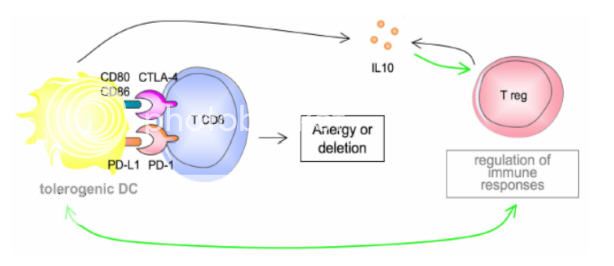
You are right on target. The biochem with IL-2 primed your Immune system, while Yervoy deactivated the T-Regs cell suppression of your T-cells. Radiation added the tumor cell debris that is needed to be presented on the Dendritic Cells which are acting as the Antigen Presenting Cells (APCs). The process can be presented in this Diagram.


Remember the this blog. It will lead to a CURE!!! Combinatorial Therapy


“It is not the strongest of the species that survives, nor the most intelligent, but the one most responsive to change.”

~Charles Darwin~

Take Care,

Jimmy B


Photobucket

Thursday, March 15, 2012

Redirecting the Melanoma Tumor’s Microenvironment in Favor of the Activation of T-cells..Jim Breitfeller


Studies show that regulatory T (Treg) cells play a detrimental role in cancer immunotherapy because these cells accumulate in the tumor microenvironment and suppress immune responses. Moreover, Researchers recently showed the presence of tumor-specific CD4+, CD8+, and γδ Treg cells in several types of tumors, suggesting that they can induce antigen-specific, local immune tolerance at tumor sites. Tumor-associated macrophages (TAMs) and myeloid-derived suppressor cells (MSC) could also play an important role in inhibiting immune responses and chronic inflammation, which has been linked to cancer development and progression. Both tumor-associated macrophages/DCs and MSCs promote tumor growth either by secreting immunosuppressive cytokines, including interleukin 10 (IL-10), transforming growth factor-β (TGF-β), and IL-1β, or by inducing Treg cell differentiation. More importantly, tumor cells have been shown to express inhibitory factors (IL-10, TGF-β, GAL-3, and IDO) to alter T-cell function. Immunosuppressive factors, such as FasL and TGF-β expressed by tumor cells, may directly inhibit tumor-reactive T-cell expansion or induce T-cell apoptosis. A recent studies suggest that tumor-associated galectin-1(Gal-1) and or Gal-3, a membes of the animal lectin family, contributes to tumor immune escapes by inhibiting the function of tumor-reactive T cells. Therefore, tumor cells constantly modulate T-cell responses by presenting tumor antigens and secreting immunoregulatory cytokines. Understanding the interplay between tumor cells and immune cells in the tumor microenvironment is essential for the development of effective cancer immunotherapy.

Researchers tested whether Gal-3 could activate other tumor-reactive or antigen-experienced T cells. Five melanoma-reactive T-cell lines, one prostate cancer–derived T-cell line, and two breast cancer–derived T-cell lines were selected and cocultured with 293 cells expressing Gal-3 for 12 to 16 h. they found that Gal-3–expressing 293 cells activated all of these T-cell lines to secrete IFN-γ but failed to activate naive CD4+ and CD8+ T cells purified from peripheral blood mononuclear cells (PBMC) of healthy donors . Suggesting that naive T-cell activation requires a strong T-cell receptor (TCR)-mediated activation, whereas tumor-reactive T cells can be readily activated by Gal-3. They also evaluated the cytokine profiles of CT28 T cells on Gal-3 stimulation. Gal-3 induced a high level of IFN-γ, granulocyte macrophage colony-stimulating factor, and low to middle levels of IL-4, which is similar to cytokine production induced by anti-CD3 (OKT3) stimulation. This is an indication that the Gal-3 complexes with the TCR synapse causing impaired signaling. Gal-3 binds and activates tumor-reactive T cells through carbohydrate-specific interaction.

Galectin-3 (GAL-3) localize mainly in Tumor cells, macrophages, epithelial cells,
Fibroblasts , and activated T-cells. Although galectin-1 has been shown to induce T-cell apoptosis, galectin-3 has conversely been shown to prevent cell death induced by Fas ligation. Galectin-3 has been shown to rescue cells from apoptosis by protecting against alterations of the mitochondrial membrane and formation of reactive oxygen species. A growing body of evidence supports the involvement of galectin-3 in tumor growth and metastasis.

Galectin-3 and IL-10 receptor needs to be inhibited to break the rest of the tolerance so the immunotherapy can have a greater effect with a better response rate.

Radiation + Yervoy + Anti-PD-1 + Anti-IL-10 receptor + GAL-3 Inhibitor= Robust immune response


“It is not the strongest of the species that survives, nor the most intelligent, but the one most responsive to change.”

~Charles Darwin~
Take Care,
Jimmy B
Photobucket

Greetings to One and All

This Blog is dedicated My Brother Kenny B. who passed away in the late 1970's with Cancer before the Internet.

It was he, who showed me How to live and give back. He was wise beyond his years.


Kenny B


Jimmy and Dee

Carepage: Jimmybreitfeller
Jimmy Breitfeller


My Profile as of 2009

My photo
Last July (2005)I was riding my bicycle to work at the Eastman Kodak Research Labs about 3 miles from home. I was wearing a knapsack to carry my things to and from the labs. I started noticing an ache on my back. So I decide to go to the dermatologist. To make the long story short, it was cancer. I knew from my research that I would be needing adjuvant therapy. So I started communicating with Sloan Kettering, University of Pittsburgh Cancer Center, and a couple of others including the Wilmot Cancer Center at Strong. I realized that by telling my story, I might help someone else out there in a similar situation. So to all who are linked by diagnosis or by relation to someone with melanoma, I wish you well. Stay positive, read as much as you can (information helps to eliminate the fear associated with the unknown), and live for today, as no one can predict what tomorrow may bring. Jimmy B. posted 12/15/08

Disclaimer

The information contained within this Blog is not meant to replace the examination or advice of your Oncologist or Medical Team. The educational material that is covered here or Linked to, does not cover every detail of each disorder discussed.

Only your physician/Oncologist can make medical decisions and treatment plans that are appropriate for you. But, An Educated Consumer is a Smart consumer.

As Dr. Casey Culberson Said:

"The BEST melanoma patient is an ACTIVE PARTICIPANT in his or her treatment
(not a PASSIVE RECIPIENT)"

Melanoma and the “Magic Bullet” (Monoclonal Antibodies)

Just to let you know I posted the first draft of the Melanoma and the “Magic Bullet” (Monoclonal Antibodies). on Melanoma Missionary In the Shared File Section. you can download it for 19.95 (Only kidding) it is Free for the taking.


It is 33 pages long and may help you in your quest for the Yellow Brick Broad. Just to let you know it is only the first draft. Revisions are sure to come. I wanted to get it to the people that need it the most, the Melanoma Patients.

Preview:

So, where does Interluekin-2 (IL-2) come into play? According to Byung-Scok et al and recent reports, IL-2 is not needed for developmental CD4+ CD25+ Treg cells in the thymus but does play an important role in the maintenance and function in the peripheral.18 Peripheral is defines as secondary system outside the bone marrow and thymus. It entails the site of antigen, immune system interaction. IL-2 is required for the peripheral generation of Tregs based Abbas’s and colleagues research.19

IL-2 prevents the spontaneous apoptosis of the CD4+ CD25+ Treg cells. It has been reported that patients with multiple advance-stage tumors have elevated levels of Tregs within the tumor microenviroment.20 Interluekin-2 is the survival factor for CD4+ CD25+ Treg cells.21 If the addition of IL-2 is on or before the maximum propagation of the CD4+ T cells, the Tregs population can increase 5-fold in a 96 hour period based on certain growth mediums.

By controlling the addition of the endogenous IL-2, one has a knob to turn and can lead to the control of the expansion of the Tregs. When you combined this control with the anti-CTLA-4 blockage, you can shift the balance of the immune response.

Now here is the catch. The maintenance and function of the CD8+ T-cells require CD4+ cells which secrete IL-2. So we don’t want to deplete the CD4+ cells, we want to control the expansion of the Tregs which are a subset of the CD4+ cells. It has been postulated by some researchers that the Anti-CTLA-4 blockage also suppresses the Treg function in a different mechanism. By using IL-2 as the rate limiting factor, we can suppress the CD4+ CD25+ Treg cell expansion by controlling the concentration and timing of the Inerluekin-2 at the tumor microenvironment.


The Interluekin-2 plays another role in this Melanoma Maze. In a study by Janas et al, Il-2 increases the expressions of the perforin and granzyme A, B and C genes in the CD8+ T-cells. This increase expression causes the CD8+ T-cells to mature into Cytoxic T Lymphocytes (CTLs). The exogenous IL-2 is required for the granzyme proteins. As stated previously, CTLs have cytoplasmic granules that contain the proteins perforin and granzymes. A dozen or more perforin molecules insert themselves into the plasma membrane of target cells forming a pore that enables granzymes to enter the cell. Once in the tumor cell, these enzymes are able to breakup (lyse) the cell and destroy it. This is the beginning of the end for the cancer cells. The tumors begin to shrink and the rest is history,


On the other hand, prolong therapy with Il-2 can result in causing apoptotic death of the tumor- specific CD8+ T-cells.23

Clearly in a clinical setting, timing, dose, and exposure to these drugs play a major roll in the immunotherapy, and can have dramatic effects on the outcome.

All it takes is that one magic bullet to start the immune reaction..

https://app.box.com/shared/kjgr6dkztj

Melanoma And The Magic Bullet (Monoclonal Antibodies)

Public Service Announcement

A call for Melanoma Patients by Dr. Steven A Rosenberg

"We continue to see a high rate of clinical responses in our cell transfer immunotherapy treatments for patients with metastatic melanoma", Dr. Rosenberg said.

"We are actively seeking patients for these trials and any note of that on a patient-directed web site would be appreciated."

If you would like to apply for his trials, here is the website and information.

Dr. Rosenberg's information


Dr. Rosenberg's Clinical Trials


For the Warriors


The Melanoma Research Alliance has partnered with Bruce Springsteen, the E Street Band, and the Federici family to alleviate suffering and death from melanoma. Please view Bruce Springsteen’s public service announcement inspired by Danny Federici. Danny was the E Street Band’s organist and keyboard player. He died on April 17, 2008 at Memorial Sloan-Kettering Cancer Center in New York City after a three year battle with melanoma.


http://www.melanomaresearchalliance.org/news/PSA/

Source Fastcures blog


Join the Relay for Life!!!

Photobucket

Dear Family and Friends,

I’ve decided to take a stand and fight back against cancer by participating in the American Cancer Society Relay For Life® event right here in my community! Please support me in this important cause by making a secure, tax-deductible donation online using the link below.

To donate on line now, click here to visit my personal page.
Jimmy B AKA Melanoma_Missionary

Relay For Life® is a life-changing event that brings together more than 3.5 million people worldwide to:

CELEBRATE the lives of those who have battled cancer. The strength of survivors inspires others to continue to fight.

REMEMBER loved ones lost to the disease. At Relay, people who have walked alongside people battling cancer can grieve and find healing.

FIGHT BACK. We Relay because we have been touched by cancer and desperately want to put an end to the disease.

Whatever you can give will help - it all adds up! I greatly appreciate your support and will keep you posted on my progress.

Keep the Fire Burning!!!

Photobucket

Sincerely,

Jimmy Breitfeller
Turn off Music before you "Click to Play"
Signs of Melanoma Carcinoma Skin Cancer

How Skin Cancer Develops by "About.com : Dermatology"

Call for Patients with Unresectable Liver Metastases Due to Melanoma


Delcath Systems Granted Orphan-Drug Designations for Cutaneous and Ocular Melanoma


Delcath is actively enrolling patients in a Phase III clinical trial testing its proprietary drug delivery system, known as Percutaneous Hepatic Perfusion (“PHP”), with melphalan for the treatment of ocular and cutaneous melanoma metastatic to the liver.

This NCI-led trial is enrolling patients at leading cancer centers throughout the United States. Commenting on these orphan-drug designations, Richard L. Taney, President and CEO of Delcath, stated, “These favorable designations are important steps in our efforts to secure Delcath’s commercial position upon conclusion of our pivotal Phase III trial for metastatic melanoma. We remain steadfast in our commitment to become the leader in the regional treatment of liver cancers and we continue to enroll patients in this study, and advance our technology and the promise that it offers to patients with these deadly forms of melanoma and other cancers of the liver, all with limited treatment options.”

Orphan drug designation, when granted by the FDA’s Office of Orphan Products Development, allows for up to seven years of market exclusivity upon FDA approval, as well as clinical study incentives, study design assistance, waivers of certain FDA user fees, and potential tax credits.


Current Trial Centers


Phase I Study of Hepatic Arterial Melphalan Infusion and Hepatic Venous Hemofiltration Using
Percutaneously Placed Catheters in Patients With Unresectable Hepatic Malignancies


James F. Pingpank, Jr., MD, FACS
Associate Professor of Surgery
Division of Surgical Oncology
Suite 406, UPMC Cancer Pavillion
5150 Centre Avenue
Pittsburgh, PA 15232
412-692-2852 (Office)
412-692-2520 (Fax)
PingpankJF@UPMC.edu


Blog Archive

Call For Melanoma Patients!!!!

Call For Melanoma Patients!!!!

Dr. Rosenberg Has a New Clinical Trial.

Our latest treatment has a 72% objective response rate with 36% complete responses.

We are currently recruiting patients for our latest trial.

Is there some way to post this “Call for Patients” on the web site?

Steve Rosenberg

Dr. Rosenberg's Clinical Trials


(For a copy of the research paper.. see My Shared files)

The news headlines shown above for Melanoma / Skin Cancer are provided courtesy of Medical News Today.